
Editor’s Pick
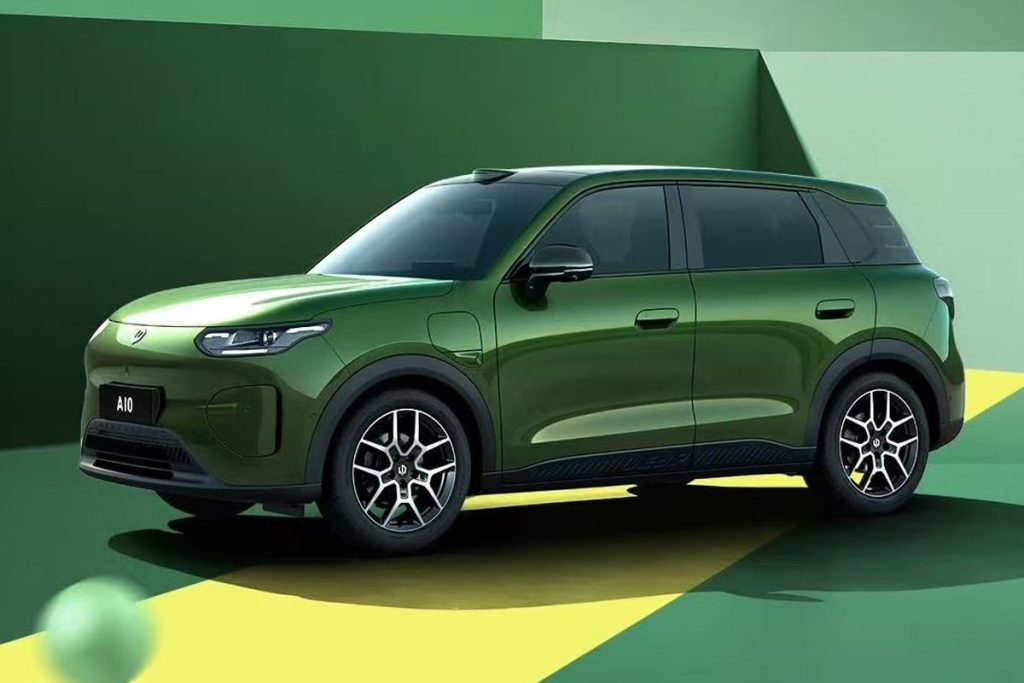
Leapmotor Launches A10 SUV with LiDAR for Under $13,000
China’s EV price war just reached a new extreme. Leapmotor has unveiled the A10 compact SUV featuring LiDAR-equipped autonomous driving capabilities at a starting price of just RMB 89,800 ($12,400). The vehicle represents a significant milestone in democratizing advanced driver-assistance systems (ADAS), bringing high-end autonomous features previously reserved for luxury vehicles to the mass market.
The A10 is built on Leapmotor’s latest LEAP3.5 architecture and features the company’s self-developed intelligent driving system with 128-line LiDAR, 11 cameras, and NVIDIA Orin-X chips delivering 254 TOPS of computing power. The vehicle offers both pure EV and extended-range versions, with the latter providing up to 1,200 km of combined range.
This aggressive pricing strategy positions Leapmotor to capture significant market share in China’s fiercely competitive sub-150,000 RMB segment, where traditional ICE vehicles still dominate. The move also signals intensifying pressure on foreign automakers who have struggled to match Chinese brands on both technology and price.
Source: CnEVPost
Today’s Intelligence
1. Pony AI Posts First Quarterly Profit, Targets 3,000 Robotaxis Globally
Pony AI has achieved its first quarterly net profit in Q4 2025, marking a watershed moment for China’s autonomous driving industry. The company reported net income of RMB 58 million ($8 million), reversing from a loss of RMB 192 million in the same period last year. Revenue surged 128% year-over-year to RMB 347 million, driven by robotaxi deployments and licensing fees.
More significantly, Pony AI announced ambitious expansion plans, targeting 3,000 robotaxis operating globally by end of 2026. The company currently operates approximately 400 vehicles across China and international markets.
Source: CnEVPost
2. Pony AI Partners with Uber and Verne to Launch Europe’s First Commercial Robotaxi
In a landmark cross-border collaboration, Pony AI has teamed up with Uber and Estonian startup Verne to deploy autonomous taxis in European markets. The partnership represents the first commercial robotaxi service in Europe powered by Chinese autonomous driving technology.
The service will initially launch in Tallinn, Estonia in Q3 2026, before expanding to other European cities. Verne will provide the vehicle platform, Pony AI contributes its autonomous driving stack, and Uber handles fleet management and rider-facing services.
Source: CnEVPost
3. GAC Expands European EV Production, Rolling Out Second Model in Austria
GAC Aion is accelerating its European expansion with the announcement of local production for its second EV model at its Austrian facility. The company began construction of its European manufacturing base last year and is now preparing for dual-model production.
The expansion reflects growing confidence among Chinese automakers in establishing manufacturing presence within the EU, potentially circumventing tariffs while meeting local content requirements. GAC aims to sell 50,000 vehicles annually in Europe by 2027.
Source: CnEVPost
4. Skoda to End China Sales in 2026 After Failing to Keep Pace with EV Shift
Volkswagen Group’s Skoda brand has announced it will cease sales operations in China by 2026, becoming the latest foreign automaker to retreat from the world’s largest auto market. The Czech brand saw its China sales plummet from a peak of 330,000 units in 2018 to just 18,000 units in 2025.
The withdrawal underscores the mounting challenges facing legacy foreign brands in China’s rapidly electrifying market. While Skoda will exit sales, the company will maintain its sourcing and R&D operations in China, leveraging the country’s supply chain and engineering capabilities for global markets.
Source: CnEVPost
5. CALB Starts Mass Production of Aviation Batteries for Xpeng Flying Car
CALB (China Aviation Lithium Battery) has begun mass production of specialized high-energy-density batteries for Xpeng’s flying car project. The batteries feature energy density exceeding 300 Wh/kg and are designed to meet the rigorous safety and performance requirements of electric vertical takeoff and landing (eVTOL) aircraft.
The partnership highlights the expanding scope of China’s EV supply chain into adjacent mobility sectors. Xpeng plans to commence test flights of its “Land Aircraft Carrier” modular flying vehicle in Q2 2026, with commercial service targeted for 2027.
Source: CnEVPost
6. Audi Begins Pre-sales of A6L e-tron with Huawei Driver-Assist System in China
Audi has opened pre-orders for the China-specific A6L e-tron, notable for being the first Audi model to incorporate Huawei’s advanced driver-assistance system. The collaboration represents a significant shift for the German luxury brand, which has historically relied on in-house or supplier-developed ADAS technologies.
The A6L e-tron features Huawei’s ADS 2.0 system with city-level autonomous driving capabilities, positioning Audi to better compete with local Chinese brands in the intelligent driving space. Pre-sale prices range from RMB 458,000 to 588,000 ($63,400-$81,400).
Source: CnEVPost
7. Mercedes Puts Zhipu AI Model in New Maybach to Woo Chinese Buyers
Mercedes-Benz has partnered with Chinese AI startup Zhipu AI to integrate locally-developed large language models into its flagship Maybach S-Class vehicles sold in China. The collaboration enables advanced voice interaction, intelligent navigation, and personalized services tailored to Chinese consumer preferences.
The move reflects foreign luxury brands’ growing recognition that winning in China requires deep localization beyond mere translation—including AI and digital services that match or exceed domestic competitors’ offerings.
Source: CnEVPost
8. RoboSense Posts 1st Quarterly Profit as Robotics LiDAR Sales Surge
RoboSense, one of China’s leading LiDAR manufacturers, has reported its first quarterly profit in Q4 2025, driven by surging demand from both automotive and robotics applications. Net profit reached RMB 42 million ($5.8 million), compared to a loss of RMB 87 million in Q4 2024.
The company shipped over 150,000 LiDAR units in the quarter, with non-automotive applications accounting for 15% of sales—up from just 3% a year earlier. This diversification provides a buffer against the intense price competition in the automotive LiDAR market.
Source: CnEVPost
9. China’s Mar 1-22 NEV Retail Sales Fall 17% Amid Post-Holiday Market Slump
China’s new energy vehicle market is experiencing a seasonal downturn, with retail sales declining 17% year-over-year in the first 22 days of March according to CPCA data. The decline reflects both the post-Spring Festival sales lull and intensifying competition that has delayed consumer purchase decisions.
However, industry analysts expect a rebound in April as automakers launch new models with aggressive pricing. BYD, Geely, and NIO have all announced significant price cuts or upgraded models with lower entry prices for Q2.
Source: CnEVPost
Industry Signal
The democratization of intelligent driving is accelerating faster than expected. Leapmotor’s sub-$13,000 LiDAR-equipped SUV and Audi’s adoption of Huawei’s ADAS signal that advanced autonomous features are transitioning from luxury differentiators to mass-market necessities. Foreign brands that cannot match this pace risk following Skoda’s path to exit.
China Automotive Intelligence — Daily Signals from the World’s Largest EV Industry