
China Automotive Intelligence Daily Brief — April 05, 2026
Curated by Ziyong (Robert) Liu
Editor’s Pick
China’s EV Industry Enters a New Phase of Structural Competition
China’s new energy vehicle (NEV) sector is transitioning from rapid expansion to structural competition, as price wars, export strategies, and technological differentiation reshape the market landscape.
Recent data suggests weakening short-term demand but strengthening long-term competitiveness. Leading players such as BYD and Geely continue to dominate domestic market share, while global expansion and supply chain integration are becoming the next battleground.
At the same time, the convergence of AI, robotics, and advanced manufacturing is accelerating, positioning China not only as the world’s largest EV market, but increasingly as a global hub for automotive innovation and industrial-scale deployment.
Source: CnEVPost
Today’s Intelligence
1. Anthropic’s private market surge highlights AI liquidity race, but SpaceX IPO could divert capital
Anthropic has become one of the most sought-after AI companies in private markets, with a valuation reportedly reaching up to $300–350 billion following major funding rounds backed by Microsoft and Nvidia.
However, the broader capital landscape in 2026 is shifting. With multiple mega-IPO candidates—including OpenAI and SpaceX—competing for investor attention, liquidity may become constrained. SpaceX alone is reportedly targeting a valuation of up to $1.5–1.75 trillion in a potential IPO, making it one of the largest listings in history.
This creates a structural tension: while AI remains the hottest theme in private markets, large-scale public listings could redirect institutional capital away from late-stage private deals, reshaping valuation dynamics across the AI sector.
Source: TechCrunch
2. China’s NEV retail sales decline reflects seasonal weakness and intensifying competition
Preliminary data from the China Passenger Car Association (CPCA) shows that China’s NEV retail sales declined significantly year-on-year in early 2026, continuing a trend of short-term softness across the sector.
For example, in January 2026, leading players such as BYD and Tesla both saw sharp year-on-year declines in domestic sales, driven by seasonal factors, export prioritization, and intensifying price competition.
Despite the slowdown, structural fundamentals remain strong. China continues to be the world’s largest NEV market, with over 20 million electric vehicles in circulation and annual sales exceeding 7 million units.
The current decline should therefore be interpreted less as demand collapse and more as a transition phase—where competition shifts from volume growth to efficiency, pricing power, and global expansion.
Source: CnEVPost
3. Geely-backed Aerofugia moves toward A-share IPO, signaling capital interest in eVTOL
Aerofugia, the eVTOL (electric vertical takeoff and landing) company backed by Geely, has begun pre-IPO preparation for a potential listing on China’s A-share market.
The move reflects growing investor interest in next-generation mobility technologies, particularly in the low-altitude economy—a sector increasingly supported by Chinese policy frameworks.
Unlike earlier speculative waves, current eVTOL players are emphasizing industrialization pathways, including certification, manufacturing scalability, and integration with urban mobility systems.
Aerofugia’s IPO preparation suggests that capital markets are beginning to treat eVTOL not just as a futuristic concept, but as a medium-term industrial opportunity aligned with China’s broader aerospace and advanced manufacturing strategy.
Source: CnEVPost
4. China tech and policy signals: supply chain inflation, platform regulation, and global service disruption
Several developments highlight the complexity of China’s current tech and consumer environment:
• Slack service disruptions in Greater China have triggered user dissatisfaction, reflecting increasing dependence on global SaaS infrastructure.
• Smartphone pricing pressures continue, with component costs—especially memory—rising faster than expected, squeezing margins for OEMs.
• Major food delivery platforms are reportedly under regulatory scrutiny, as authorities prepare to implement stricter food safety rules starting June.
Together, these signals point to a broader theme: China’s digital economy is entering a phase where cost pressure, regulation, and infrastructure reliability are becoming as critical as growth.
Source: 爱范儿
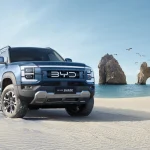
5. BYD pushes price-performance frontier with long-range PHEV offering
BYD continues to expand its dominance in the plug-in hybrid (PHEV) segment, launching models that combine ultra-long electric range with aggressive pricing—reportedly starting around RMB 111,900.
China’s NEV market uniquely integrates both battery electric vehicles (BEVs) and PHEVs, allowing automakers like BYD to capture a broader consumer base across different usage scenarios.
By pushing the limits of electric-only range in hybrid systems, BYD is effectively redefining the value proposition of PHEVs—positioning them as a transitional but highly practical solution for mass adoption, especially in lower-tier cities and export markets.
Source: 爱范儿
6. Tesla unveils D3 chip, extending computing ambitions beyond automotive
Tesla has introduced its next-generation D3 chip, reportedly designed for high-performance computing applications, including potential use in space-based or distributed computing systems.
This move signals Tesla’s continued expansion beyond automotive into broader AI and computing infrastructure. Combined with Elon Musk’s ecosystem—including SpaceX and xAI—the strategy points toward an integrated vision of AI + energy + space + mobility.
Rather than being a standalone automaker, Tesla is increasingly positioning itself as a vertically integrated technology platform, competing not only with traditional OEMs but also with cloud and AI infrastructure providers.
Source: IT之家
Industry Signal
China’s automotive industry continues its rapid transformation, with domestic players achieving profitability milestones and expanding global market share across the EV value chain.