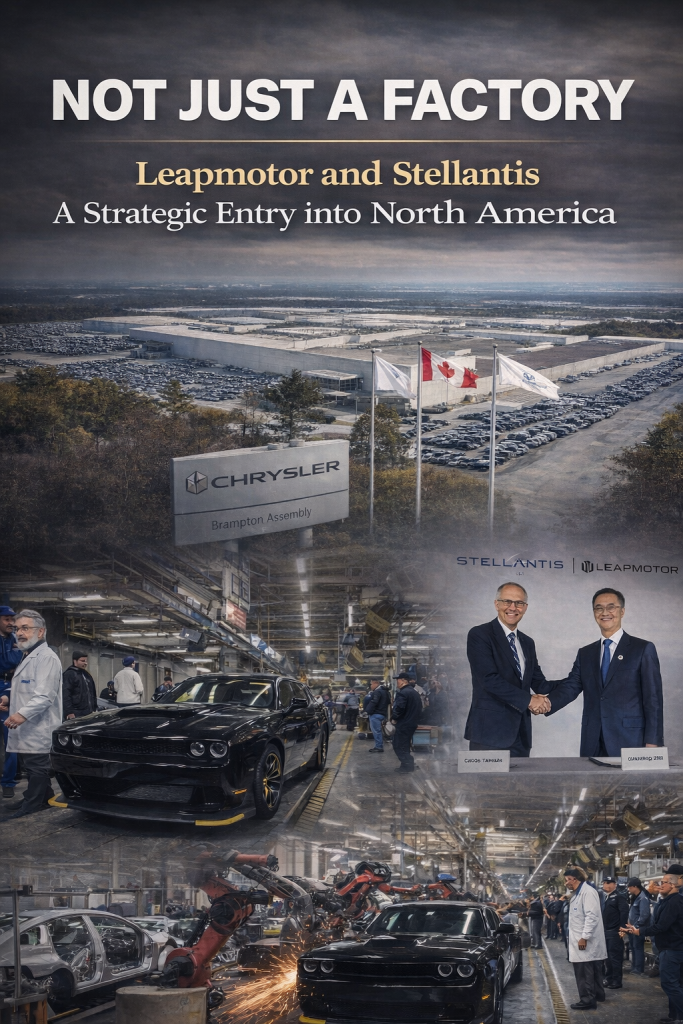

According to recent reporting by Bloomberg, Stellantis is in early-stage discussions with Leapmotor over a dormant assembly plant in Canada.
On the surface, it looks like a routine factory reuse story.
It is not.

Introduction
According to recent reporting by Bloomberg, Stellantis is in early-stage discussions with Leapmotor to potentially utilize its idled assembly plant in Brampton, Ontario.
At first glance, this looks straightforward — a dormant factory, a new user, a typical capacity reuse story.
But that framing is too shallow.
What is really at stake here is not an empty plant, but a strategic entry point into one of the most protected automotive markets in the world.
1. From AMC to Stellantis: A Factory with Real Industrial Memory
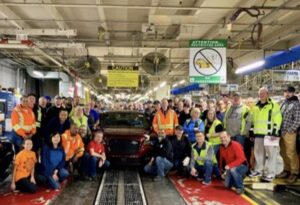
The Brampton Assembly Plant is not a blank asset waiting to be repurposed. It carries decades of industrial history.
Built in 1986 by American Motors Corporation, the plant later became part of Chrysler, transitioned through FCA, and now sits within Stellantis.
For years, it produced some of the most recognizable rear-wheel-drive vehicles in North America:
- Dodge Charger
- Dodge Challenger
- Chrysler 300
This was not just another assembly site. It was one of the last remaining hubs of North American muscle car production.
At its peak, more than 3,000 workers operated here. For the local economy, and for Canada’s auto sector, this plant mattered — and still does.
2. Why It Went Idle: Not Decline, but Transition
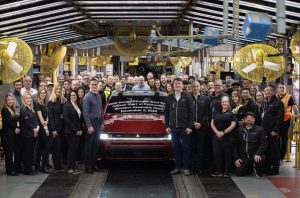
The shutdown of Brampton was not a story of failure. It was a story of transition — and incomplete execution.
Stellantis initially planned to retool the plant for electrified production, including the next-generation Jeep Compass. That plan, however, changed direction.
The Compass program was eventually reassigned to the United States, leaving Brampton in a kind of industrial limbo.
Behind that shift were several overlapping pressures:
- The rapid move toward EV platforms
- Capital prioritization across a global manufacturing network
- Increasing policy incentives favoring U.S.-based production
The result is unusual: a large-scale, fully capable automotive plant — idle, but not obsolete.
3. Why Leapmotor: Not Just Access, but Positioning

Leapmotor’s potential involvement is not coincidental.
Through its existing partnership with Stellantis, it already has something most Chinese EV companies lack: a structural pathway into Western markets.
Using Brampton could unlock three things at once:
Manufacturing localization
Producing in Canada could help soften tariff barriers and political resistance tied to direct imports from China.
Regulatory access
Operating within the Stellantis framework may simplify compliance in a highly regulated environment.
Brand repositioning
This is perhaps the most important. Moving from “Chinese exporter” to “localized global manufacturer” changes how the company is perceived — by regulators, partners, and customers.
Why Leapmotor Actually Matters
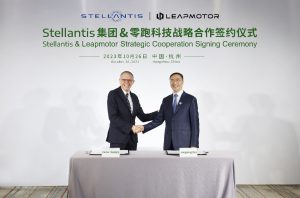
What makes Leapmotor worth paying attention to goes beyond this deal.
Having observed its operations up close in Hangzhou on a regular basis, one thing becomes clear: it represents a different kind of Chinese EV company.
First, it is relentlessly value-driven. Its products deliver a level of features and performance that often tracks — and sometimes rivals — players like Tesla and BYD, but at a much more accessible price point.
This is not positioning by accident. It is engineered.
Second, it is engineering-led. The company has built meaningful in-house R&D capability, and that shows in how its vehicles are developed — from system architecture to integration.
Third — and this is the part many outside China underestimate — it is deeply shaped by China’s supply chain environment.
That means:
- Aggressive cost structures
- A wide and flexible supplier base
- A procurement logic that prioritizes performance-to-cost over legacy relationships
If a supplier can deliver, it gets the order. If not, it gets replaced.
This creates a level of cost efficiency that is extremely difficult to replicate elsewhere.
Put simply, Leapmotor is not just a company — it is an outcome of a system.
4. The Real Barriers: This Is Not Just an Industrial Decision

On paper, the logic works.
In reality, this is where things get complicated.
Canada’s automotive sector sits at the intersection of government subsidies, labor unions, and industrial policy.
Introducing Chinese EV production into that system is not a purely commercial move. It is a political one.
The constraints are clear:
- Union pressure to protect domestic jobs
- Government scrutiny of foreign participation in strategic manufacturing
- Public sensitivity around supply chains and national security
Recent tensions over Stellantis shifting production to the U.S. have already raised the stakes.
In that context, Brampton is no longer just a factory. It becomes a signal — about policy, priorities, and control.
5. Final Assessment: More Than a Factory Deal
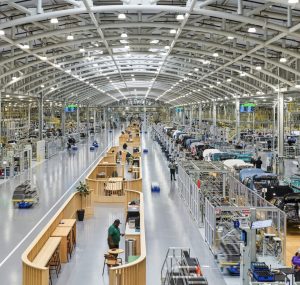
This is not a typical contract manufacturing story.
It is a strategic test shaped by three forces:
- EV competition
- Trade policy
- Industrial localization
For Stellantis, it offers a way to reactivate an idle asset while expanding its EV strategy.
For Leapmotor, it could be the first meaningful step into North America’s tightly controlled automotive ecosystem.
But success is far from certain.
Because today, factories are no longer just about production.
They are about who gets access — and under what conditions.
Closing Thought
Seen from that perspective, Leapmotor is not just entering a factory.
It is stepping into a system — one defined as much by politics and policy as by engineering and cost.
And that is what makes this story worth watching.
Curated by Ziyong (Robert) Liu